
ADHD Accommodations That Actually Help Everyone
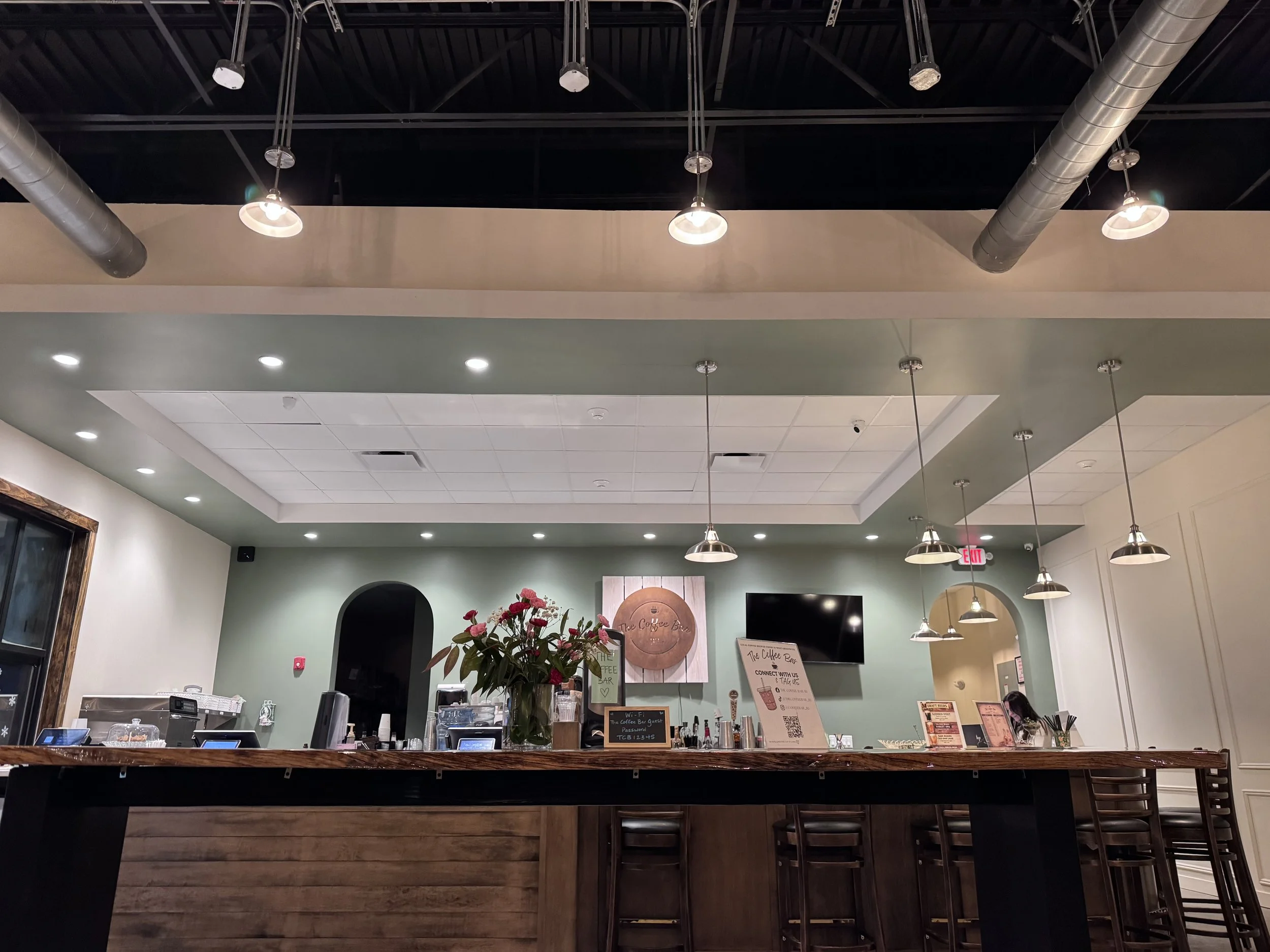
Clear counters, open seats, a busy buzz of energy: how I imagine my brain at its functioning best, and what I do as a hybrid ADHDr to get there
My client Amy (not her real name), a 45-year-old director-level product engineer with a team of about two dozen, was in the middle of getting her kid evaluated for ADHD when the psychologist paused, looked at her, and said, "Has anyone ever assessed you?"
She laughed. Then she cried.
Then a whole lot of previously unrelated things suddenly made sense.
The brain that was never quiet — constant internal chatter blocking out what she saw in others as calm, effortless functioning.
Responses in one second or fourteen days or… never.
Raging imposter syndrome riding shotgun with barely-managed anxiety.
Her favorite and most troublesome word: Yes, of course. People pleasing as a non negotiable.
Her energy was wildly inconsistent. One day, she'd be on fire, flooding inboxes with completed task notifications. The next day she'd stare at her screen, eyes zoning out, brain stalled in what I now call functional freeze.
She loved kickoffs and project starts but flagged in the middle.
She tried really hard to pay attention while someone was speaking, but inevitably zoned out — then faked full understanding rather than ask them to repeat themselves.
She persistently underestimated how long things would take, then got heroically motivated by urgent deadlines, just like in college.
She was always doing seven things at once, often without excellence, because single-tasking felt boring and she was afraid she'd forget the other things if she didn't jump on them immediately.
And the coping mechanisms were exhausting.
She clung to task lists like a fifth appendage.
She overcompensated by working longer hours and building complex organizational systems.
She tried to hide growing pockets of disorganization, which got harder and harder.
She'd harbored shame about "laziness" and "sloppiness" for decades — which, for the record, are the furthest things from the truth.
Maybe some of this sounds familiar. Maybe all of it does.
A Pattern Hiding in Plain Sight
After her diagnosis, Amy — a tireless advocate for others — started working with me and advocating for herself at work. With practice and a huge dose of ego-checking at the door (Do. Not. Underestimate. This. Step), she figured out what accommodations she actually needed.
Things like:
Clear expectations in writing
Fewer but better meetings (clear agendas, a reason for gathering vs. email, shared thorough notes and assignment)
Flexible start times
Permission to take breaks, walk, exercise, faff around for a minute because her brain needs to regenerate
Direct feedback without personal commentary
Autonomy on the "how" within guardrails on the "what" to honor her need for both structure, routine, clarity, transparency, and autonomy to let her naturally creative divergent brain work its magic.
And then, every manager and HR department's worst nightmare: the rest of her team saw these accommodations and wanted in.
“That sounds… amazing…”, they said.
“Well yes, but do you have a documented disability?”
“No… not exactly? But… do I really need one?”
They didn’t want special treatment and weren’t jumping on a (mythical…) diagnosis bandwagon. What Amy asked for — just made work better. For all of them.
This tracks with what I see in my coaching practice every week. Leaders, parents, professionals running at full capacity or beyond it — many with diagnosed or suspected neurodivergence, many without — all struggling with the same fundamental mismatches between what their brains need and what their environments demand.
And it raises a question worth sitting with. Maybe the accommodations we think of as "special" are actually just… good work design for humans.
ADHD or Your Brain on Life These Days?
Before we go further, a quick reframe on ADHD itself. Because a lot of what gets passed around as common knowledge doesn't hold up.
ADHD is not a deficit of attention.
People with ADHD can be excellent at focus — especially when something is personally interesting, appropriately challenging, or offers high reward and variety. The challenge is with directing and sustaining attention on low-dopamine, repetitive tasks without significant support.
It springs from genuine brain differences, including both neurotransmitter variations (particularly around dopamine and norepinephrine) and overall nervous system sensitivity — difficulty distinguishing signal from noise when everything feels like signal.
This nervous system sensitivity often travels with a strong sense of justice, intense emotional waves, and a heightened antenna for how other people are feeling — which can be a genuine superpower and a genuine source of exhaustion, sometimes in the same afternoon.
BUT! ADHD-like symptoms and experiences are common to many of us in the modern world
AND! ADHD-accommodations really can benefit everyone, even if you’re not struggling with these symptoms.
Research on cognitive load and digital media use suggests that many of us are now functioning with ADHD-like brain patterns, whether we were born with them or not.
The constant input of notifications, doom-scrolling, always-on workplace cultures, and the mental labor of managing multiple roles — parent, professional, partner, household manager — can chronically overwhelm executive functioning capacity in anyone.
Dr. Gabor Maté's work on the relationship between stress and attention makes a compelling case that ADHD traits can be acquired through environments that chronically overwhelm the nervous system, particularly when those environments start in childhood.
And for people who were born with neurodivergent traits, these modern stressors don't just add to the load. They amplify it.
Psychiatrist William Dodson, M.D., estimates that by age 12, children with ADHD receive 20,000 more negative messages from parents, teachers, and other adults than their peers without ADHD. Twenty thousand extra corrections, reprimands, sighs of frustration, and "why can't you just…" messages before they've finished middle school. That kind of accumulated feedback doesn't just affect self-esteem. It rewires the shame circuitry. It trains a nervous system to be on high alert for criticism, which then looks like people-pleasing, perfectionism, imposter syndrome, and the kind of over-functioning that eventually collapses into burnout.
This is part of what I map when I work with clients using the Forest Fire Model — the "drought" conditions, the long-term factors that made someone's system vulnerable to catching fire in the first place. And I cannot tell you how many clients — with and without ADHD diagnoses — carry a version of this same shame-driven operating system.
So Why Do ADHD Accommodations Help Everybody?
There's a framework from psychology that makes this click, and it’s one I use in coaching all the time. Not just because many of my clients are neurodivergent — though that’s true — but because this framework speaks to basic human needs..
Self-Determination Theory, developed by psychologists Edward Deci and Richard Ryan, identifies three basic psychological needs that all humans require for motivation, well-being, and optimal functioning:
Autonomy — the ability to choose what you do and how you do it, to feel like the author of your own actions
Belonging — psychological safety, belonging, healthy interdependence with people who see and value you
Competence — the opportunity to pursue mastery, to get better at things that matter to you, to feel effective
When these three needs are met, people thrive. They're more creative, more engaged, more resilient under stress.
When they're thwarted — when someone has no choice over their work, no clarity about what "good" looks like, or no sense of belonging and safety — motivation erodes, engagement drops, and burnout accelerates. This isn't opinion; it's backed by decades of research published in American Psychologist and replicated across cultures and contexts.
Now look at Amy's accommodation list through this lens:
Autonomy supports:
Flexible start and end times, remote work days
Autonomy on the "how" within clear guardrails on the "what"
Ability to control her own calendar and task-block
Ability to not be "working" during "work hours" — because brains need to recharge, and productivity isn't measured by hours of chair-sitting
Competence supports:
Clear job descriptions and written expectations of what "done" looks like
Consistent processes and routines that minimize unnecessary cognitive load
Direct, specific feedback that acknowledged effort and intention without personal commentary
Rewards, positive acknowledgment for work well done — dopamine plus direction
Relatedness supports:
Clarity about company state and rumors (because when your nervous system is in threat-perception mode, ambiguity is torture)
Freedom to ask questions and get the facts straight
Ability to go off camera without penalty — the brain needs breaks from being perceived
A culture where asking for what you need isn't a sign of weakness
Your executive functioning could be military-grade, and you'd still benefit from clear job descriptions, concise tasks, a compelling picture of what "done" looks like, autonomy, sufficient processing time, and feedback that isn't laced with personal judgment.
I wrote about this dynamic in how well-intentioned leaders accidentally create burnout culture — the same patterns that drive leadership at work tend to drive how we run our homes, too. And in both arenas, people want the same things. Radical candor (because kindness is clarity). Work that's meaningful. Flow instead of multi-tasking. Safety to experiment and fail without being defined by it. Leaders with heart. Permission to be human.
Four Things to Try This Week
These are pulled directly from what works for my clients — people with and without ADHD diagnoses, leaders and parents and humans trying to function in a world that asks a lot.
1. Write down what "done" looks like — for yourself or someone else
If you manage people, this is a gift you can give today. If you're managing your own workload, it's a gift to your future brain-fogged self. Instead of "work on Q2 strategy," try "draft a one-page outline with three priority areas and preliminary budget estimates by Thursday at 3pm." The more concrete and specific, the less executive functioning your brain (or someone else's) has to burn just figuring out what to do. This takes five minutes and can save hours of spinning. It also maps directly to the "L" in the FLOURISH method I use with clients — Listen to Your Body. When your body is sending signals of overwhelm and freeze, one of the first things to externalize is the cognitive labor of holding ambiguous expectations in your head.
2. Give yourself (or someone) one pocket of unscheduled time per day
Not a break. Not "self-care." Just… an empty slot. Twenty minutes where nothing is expected. For people with ADHD, this is often when the best creative thinking happens — when the default mode network and the task-focused prefrontal cortex can actually cooperate instead of competing. For all of us, unstructured time is where the nervous system recalibrates. It's not laziness; it's integration. You might use this for a walk, or staring out the window, or scrolling if that's what your brain wants. The point is there's no deliverable. Nobody's grading it. It exists because your cognitive capacity is not unlimited, and pretending otherwise is how people end up in my office.
3. Practice one round of "observable behavior" feedback
Most of the feedback we give — at work, at home — is loaded with interpretation, assumption, and sometimes personality critique. Compare: "You're disorganized and it's impacting the team" with "I've noticed the last three project briefs were submitted after the deadline, and the team needed to adjust their timelines. Can we figure out what's getting in the way?" The first one triggers shame, defensiveness, shutdown. The second one describes observable behavior, names the impact, and invites collaboration. This is a skill from my secure leadership work that applies equally to conversations with your team, your partner, and your twelve-year-old. It takes practice. But the difference is enormous — and it maps directly onto the competence and relatedness needs from Self-Determination Theory.
4. Name one accommodation you've been afraid to ask for
Not out loud, necessarily. Just to yourself. Maybe it's the ability to close your door for two hours without guilt. Maybe it's telling your partner you need fifteen minutes alone before diving into the evening routine. Maybe it's admitting that morning meetings before 10am are actively working against your circadian rhythm, and that's not a character flaw. This is part of the "O" in FLOURISH — Own Your Boundaries. Naming what you need is the first step. You don't have to ask for it yet. Just notice what came to mind, and let that information sit for a minute.
Go Deeper
You can implement every accommodation on Amy's list. You can optimize your calendar, externalize your brain, request flexible hours, and write "done" criteria for every task. And if you do, things will get better.
But here's what I've learned from years of working with high-achieving people in various stages of burnout and recovery. The accommodations, the tools, the systems — they're the surface layer. Necessary, but not sufficient.
Because underneath the need for accommodations, there's often a quieter question. Something like: Am I allowed to need this? Am I allowed to work differently? Is it okay to not be the one who handles everything, who powers through, who doesn't complain?
I've watched clients implement beautiful systems and then sabotage them within weeks. Not because the systems didn't work, but because the systems contradicted a deeper belief — something like "I don't deserve support" or "asking for help means I'm weak" or "if I slow down, people will see I was never that competent to begin with."
In the Forest Fire Model, this is the drought layer. The long-term, often intergenerational pattern of over-responsibility, self-denial, and worth-through-production that made the whole forest dry and ready to burn long before any particular spark arrived. And while practical tools can douse the flames — I'd never suggest otherwise — lasting recovery involves understanding and tending to the drought, too.
I mention this not to make the practical stuff feel inadequate. It's genuinely helpful. Try the strategies above. They work. I just want to name what happens for a lot of people when they try them and still feel stuck — because that experience is common, it's not a personal failing, and it doesn't mean the tools are wrong. It means there might be a layer underneath that's worth getting curious about.
When Amy got her diagnosis, the accommodations mattered. But what changed her life was the moment she stopped masking. When she checked her ego at the door and let her team see her as she actually was. When she stopped spending half her cognitive capacity on hiding, and redirected it toward doing great work and being a human people wanted to follow. That's when her creativity, confidence, and magnetic energy came back. That's when people wanted to work for her.
The accommodations were the mechanism. The deeper work — the part where she allowed herself to be seen, imperfect, and still worthy — was the fuel.
If This Resonates
A blog post can start a conversation, but it can't hold the whole thing. The kind of work I'm describing here — understanding your own burnout map, untangling beliefs that keep you stuck in over-functioning and under-receiving, building back energy and agency one small experiment at a time — that's what happens in coaching.
If you're curious about what that might look like for you, I'd love to talk. You can book a free discovery session or explore the Regenerate + Relaunch program, which is my 13-session burnout recovery experience. And if you just need a nudge in the right direction, The Next Right Step is a single focused session to get unstuck.
If you know someone who needs to read this — a friend who's running on fumes, a colleague who's quietly drowning — please share it. My referral program is my way of thanking you for spreading the word, because I believe burnout recovery is contagious in the best possible way.
You can also catch me on the Now That You See It podcast, where I go deeper on these topics every week.
You're not supposed to do this alone. That might be the most important accommodation of all.
Sources cited in this post:
Ryan, R.M. & Deci, E.L. (2000). Self-determination theory and the facilitation of intrinsic motivation, social development, and well-being. American Psychologist, 55(1), 68–78.
Dodson, W.W., M.D., as cited by CHADD (Children and Adults with Attention-Deficit/Hyperactivity Disorder) on the estimated 20,000 additional negative messages received by children with ADHD by age 12.
Maté, G. (1999). Scattered Minds: The Origins and Healing of Attention Deficit Disorder. Vintage Canada.
Tops, M. et al. (2016). Why is ADHD Not Associated with Reduced Experience of Pleasure? A Study on Reward and Punishment Sensitivity in Children with and without ADHD. Journal of Child Psychology and Psychiatry. (Via ADDitude Magazine summary.)
