4 Ways to Stop Carrying What You Don't Need (Backed by Science)
Fortunately for McQuade’s Marketplace in Jamestown, RI, I’m the person who says yes to "would you take some of these free pumpkins we're trying to get rid of?" in mid-November.
Unfortunately, I'm also the person who leaves said pumpkins in my Honda Accord trunk for weeks, where they morph into smuggled bowling balls crashing into my kids' backs at every red light.
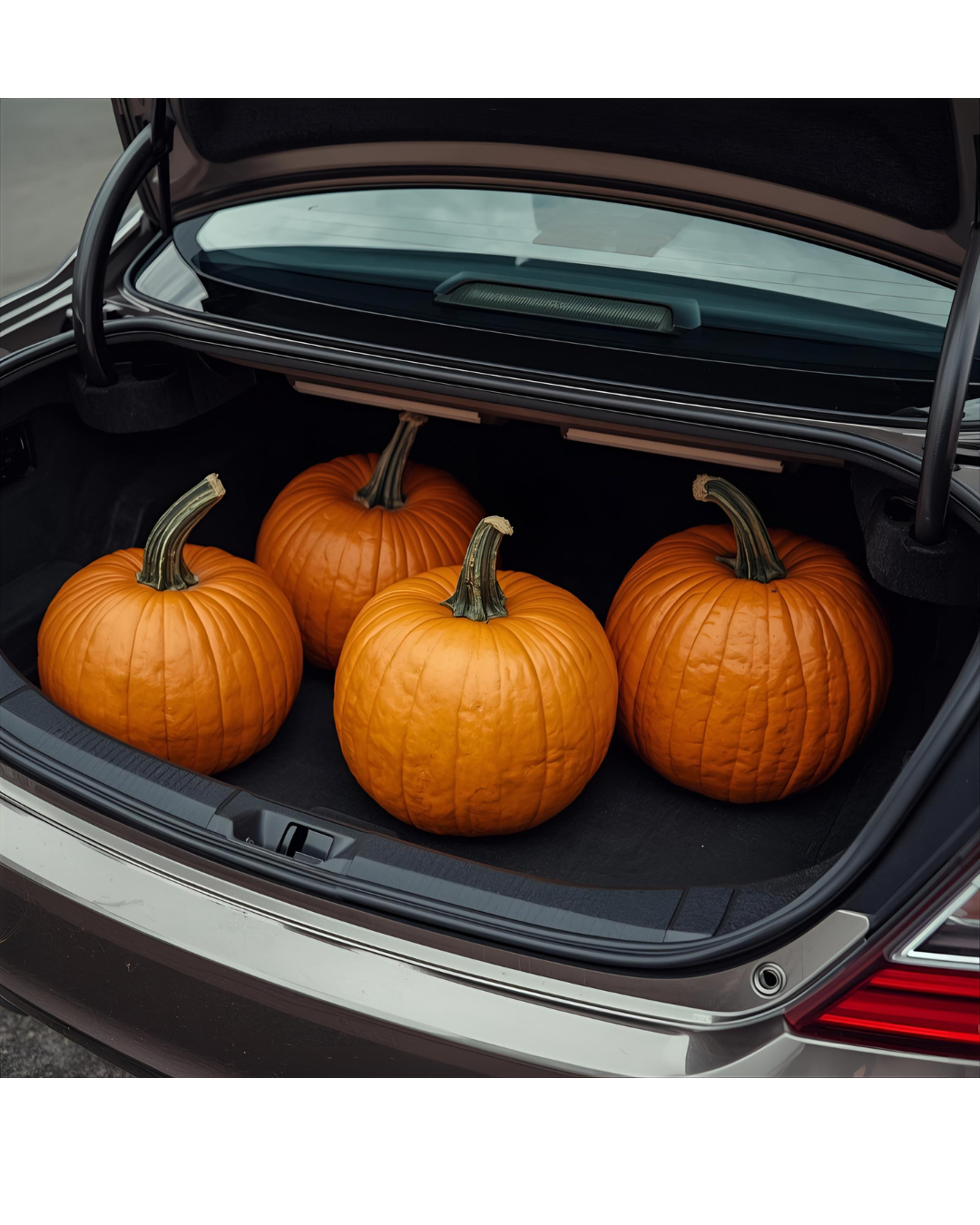
Junk in the truck, what what
And to every "OUCH MOMMY THE PUMPKINS ARE STILL HERE?!", I promise that today's the day I'll "do something" with the pumpkins.
Reader, these are empty words. I don't even know what I meant by "do something". I'm not Martha Stewart. I can't make a whimsical late fall front porch display if my life depended on it. And I don't trust these pumpkins to be safe enough to eat, especially after a month spent in my cavernous dark rock tumbler of a trunk.
Predictably, the Do Something Day didn’t come until I'd bargained with myself and my children for so long I lost the thread.
I'm no longer a patient mom-artist waiting for her pumpkin-spiced muse. I'm a mob boss who wants these pumpkins to quietly "disappear".
Where can I offload these demonic orange globes so no one, including my children, will notice and I'll be free of them forever?

Which is why there are now four medium-sized pumpkins at the end cap of the grassy center median of the Home Depot parking lot in North Kingstown, chilling among the poinsettias in the "50% off all Plants with Red and Black Pots" display…
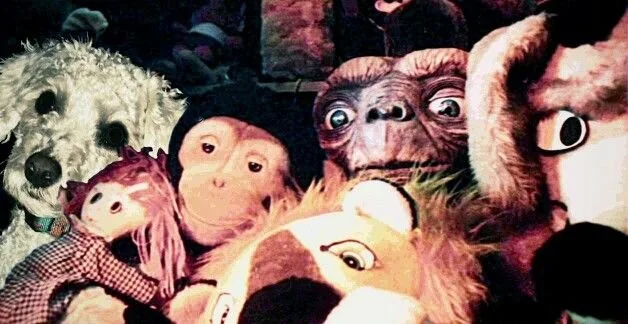
Make it stand out
…like little ETs hiding among the stuffed animals, waiting for someone to notice.
How Did It Come to This?
How did we go from "Oh YAY free pumpkins! How delightful!" to
one more project
one more thing I said yes to when I was drunk on capacity (empty trunk; I’m not swamped by the holidays yet)
one more reminder that I'm still a sucker for the dopamine hit of "helping someone in need" when that help puts me out and they don't really need MY help
one more reminder that free isn't free, and there's a very good reason McQuades was literally begging people to take their pumpkins?
Q: Why didn't I just open the trunk and throw them in the trash?
Great question, Judgey McJudgerson.
A: I tell myself it's because it's cold out and I don't want to take another trip to the trunk.
Or maybe there are too many things to remember and it slips my mind... every day.
All of the above, sure.
But really, it's because I have what I'm calling Put It To Use Panic (PITUP).
Understanding PITUP
Once I "own" something (and that bar is low, friends – it more or less has to just float into my awareness and be not otherwise clearly claimed), my brain takes responsibility, an interest, forms an attachment.
It says "I bet that'll be useful someday" or "I bet the kids and I could turn that into an activity" or "It's free?? Why NOT?!"
In case you were wondering, yes hoarding does run in my family, and yes I am aware that me plus garage sales, "the free box," "curb alerts" and "will you take these free pumpkins off our hands" is like someone in recovery walking into a well-stocked bar with a generous bartender.
I stay away from those places not because I'm above them, but because within about five seconds, I'll be the owner of Other People's PITUP.
And PITUP, whether yours or someone else's, is sneakily expensive, especially when you haven't seen it yet.
The Science of Why We Hold On
Most humans fall prey to a cascade of cognitive biases and psychological patterns that mean we miss how expensive it is to hold on to things we don't love and can't readily and easily use.
This happens especially when you're under stress—and it itself causes more stress.
Phase 1: The Human Drive to Acquire
The dopamine hit of possibility
Research on intermittent rewards shows that unpredictable positive outcomes (like finding free pumpkins or a great deal) activate our brain's reward system more powerfully than predictable ones. That initial "ooooo, free pumpkins!" feeling is real neurochemistry.
Deep discounts warp our judgment
We lose our objective brain that actually looks at the paid price and the carrying cost relative to the actual likely value.
We just say "You wouldn't believe the price I paid! 70% off!" or "But the pumpkins were FREE."
Research on anchoring effects demonstrates that when we see a high "regular" price next to a sale price, we evaluate the purchase based on savings rather than actual value to us.
We fill the space we have
Then we expand the space to fit the stuff we have, and then we fill the new space we have on loop. We do this with time too, often overstuffing both our calendars and closets.
The psychological relief of helping
If your worth is defined by how helpful you are and how other people perceive your helpfulness, acquisition becomes particularly pernicious. Saying yes to taking someone's unwanted pumpkins feels like demonstrating value.
Stress degrades decision-making
My grocery bill when shopping with my kids, who act like hamsters on PCP at Trader Joe's, is about 40% higher than when I shop alone.
I say yes to a lot. I forget what I've said yes to already. I justify because the pain of one more argument is just too much for my already high mental load. Research shows that high cognitive load makes us more susceptible to impulse decisions and less able to evaluate long-term consequences.
Scarcity mentality drives acquisition
If you're coming from a place of not having enough—and not just stuff, but also time, money, safety—your sense of scarcity may drive acquisition.
My paternal grandparents were born during the Great Depression and were first-generation Hungarian immigrants, along with everyone else in their tight Orthodox Catholic Perth Amboy, NJ parish. All they knew was scarcity (and an abundance of community, for sure).
My maternal grandparents were poor Irish and English folks from the same generation. My grandmother used her first paycheck to take herself to the dentist for the first time.
Those are not trivial facts. Those are just the furthest back examples of intergenerational scarcity roots I can name, but I'm sure the respective Old Countries weren't lush with luxury.
Having stuff around feels safe, useful, a no-brainer, especially if it's “free”. How many times have I heard myself pick up a random Sharpie (they're so useful!) and say "Just in case...", only to add it to the sharpie proliferation in our house?
The Real Tough One: Emotional scarcity and self-soothing through stuff
If you experience emotional scarcity (love, attention, reward, secure relationship to self, and trust in your own goodness), and haven't been lovingly shown how to tolerate the discomfort and heal both on your own and in relationship—which is exceedingly rare—you're more likely to use stuff to fill those holes-in-the-soul.
But it's like trying to fill a leaky bucket. It never stays full, it's never actually satisfying, you keep looking for peace outside yourself.
Phase 2: Junk Alchemy – When Detritus Turns to Gold
Once we own something, a fascinating transformation happens in our brains.
The Endowment Effect
Research by Daniel Kahneman, Jack Knetsch, and Richard Thaler demonstrated that people value items they own significantly more than identical items they don't own. In their famous study, participants who were given a coffee mug demanded prices to sell it that were roughly twice as high as participants were willing to pay to buy the same mug.
Economist Richard Thaler coined the term "endowment effect" in 1980 to describe how emotional attachment changes an object's worth. We don't just own things—they become part of our identity.
Psychological Ownership
Even short periods of ownership create a mental link to the self, increasing attachment. Research published in the Journal of Personality and Social Psychology found that the "mere ownership effect" happens quickly and without conscious awareness. The item becomes part of "you," so letting go feels like a personal loss.
Loss Aversion
The concept of loss aversion, also developed by Kahneman and his colleague Amos Tversky, explains that the pain of losing something is psychologically about twice as powerful as the pleasure of gaining something of equal value. We're hardwired to hold on.
This may have evolutionary roots: for organisms operating close to survival, the loss of a day's food could mean death, whereas gaining an extra day's food wouldn't add an extra day of life (unless it could be stored). We inherited brains that treat threats as more urgent than opportunities.
Fear-based thinking
What if we need that thing and we don't have it? What if we have to go acquire it and it's more expensive? These questions keep us holding on, even when the current cost of keeping the thing exceeds the hypothetical future cost of replacing it.
But it's backwards—because we incur all these quiet costs just to keep the theater of "that was a smart investment" alive.
The Real Costs of Carrying
Literal carrying costs
Those four pumpkins literally and figuratively weighed me down. They cost gas. They took up space. They knocked my children in the back for four weeks. More practically: think storage units, the space your ill-fitting or never-worn clothes take up in your closet and wrinkle up your nice stuff.
Cognitive costs
The mental load of trying to think of what to do with the thing, how to get rid of it, how to donate or gift it, or that it even exists. Research on decision fatigue shows that every decision we haven't made drains our cognitive resources.
Visual clutter creates cognitive drain
Studies on environmental psychology demonstrate that visual clutter competes for our attention and reduces our ability to process information.
"Clear the visual field" is a refrain in our house: it’s the first step when we need the kids to do homework or when any of us is overwhelmed.
And true story: the kids’ playroom is NEVER a clear visual field and it’s right in the open layout downstairs. So you know what we do? We hung light linen curtains. Buh bye.
Emotional costs
Recognizing self-sabotage. Being embarrassed that you have so much stuff. Feeling you have to defend your acquisition decisions. The shame spiral when you see the pumpkins again.
Opportunity costs
What else could I have been doing with my time, energy, brain, trunk? What relationships or projects am I not investing in because my resources are tied up managing things I don't actually want?
Overall energy drain
This is particularly significant when you're otherwise so careful about how you direct, spend, and nurture your energy. Each item you're carrying that doesn't serve you is a leak in your energy system.
The cost of depriving others
Someone who could actually use this thing, now, isn't getting it because we might find a use for it someday and it's a good deal and...
Until all those things add up, you lose sight of the threat, and you're weaving pumpkins into poinsettias at the Home Depot parking lot.
It's Not Just Things
It's not just physical objects we carry. It's the weight of other people's expectations. Their discomfort. Their unprocessed emotions and experiences that they want to offload onto us.
In Internal Family Systems therapy, this is known as "legacy burdens" and sometimes "carried shame." Intergenerationally, we inherit unprocessed trauma and beliefs.
The pumpkins are a metaphor for this whole other lifetime of work: Identifying what feels like "your voice," "your habits," "your natural instincts," "the way we do things" but actually is… your mom's, your dad's, your great-great-great-grandmother's unprocessed material, handed down and reshaped into anxiety, hypervigilance, zero tolerance for whining or complaining or days off, no such thing as a sick day, don't let them see you cry or need or fear or fail.
We carry beliefs like:
"I can make a mistake once, but NEVER the same mistake twice"
"There's something wrong with me if I don't lose the baby weight"
"Rest is for people who didn't work hard enough"
"If I'm not productive, I'm not valuable"
"Asking for help means I'm weak"
These thought patterns have carrying costs too. They drain our energy. They create shame. They keep us from accessing what we actually need.
How to Notice What You're Carrying
If you're experiencing burnout or chronic overwhelm, chances are you're carrying more than you realize. Here's how to start seeing it:
For physical items:
Notice what catches your eye when you walk through your home. Not the things you love and use regularly, but the things that make you think "I should do something about that" or feel a little ping of guilt or obligation.
Ask yourself: Does this actually and consistently lighten my load in life, or add to it? Do I use it regularly? If not and I really needed it, could I acquire it within two days?
Before you add something new to your home or… trunk, go upstream from Marie Kondo's "Does it spark joy?" to "Does the value justify all the costs I'm incurring to keep it around?"
Pay attention to things you've moved from place to place but rarely or never used. Each move was a choice to keep carrying it.
For emotional and mental burdens:
Notice recurring thoughts that feel heavy or create tension in your body. "I should be further along by now." "I can't believe I did that." "What will people think?"
Pay attention to where you feel resentment. Resentment is often a sign that you're carrying something that isn't actually yours to carry—someone else's expectations, their unprocessed feelings, their version of who you should be. It’s a great sign your internal boundaries are violated and could use some shoring up — something got in that doesn’t belong.
Notice your "shoulds." Each "should" is something you're carrying. Ask: According to whom? Is this actually mine?
Watch for intergenerational patterns. When you hear yourself sound exactly like your parent, pause. Is this actually how you want to respond, or is this an inherited pattern running on autopilot?
For obligations and expectations:
Look at your calendar. Which commitments energize you and which ones drain you before you even begin?
Notice where you say yes when you mean "maybe" or "I need to think about it." Each premature yes becomes something else you're carrying.
Pay attention to where you're performing an identity that no longer fits. Are you still showing up as the person you were five years ago because it's expected?
The Connection to Burnout
Burnout researcher Christina Maslach describes burnout as having three core components: exhaustion, cynicism, and reduced sense of personal accomplishment.
When we're carrying too much—physically, emotionally, mentally—all three show up:
Exhaustion comes from the actual weight of what we're managing and the cognitive load of tracking it all. Your brain is keeping tabs on every pumpkin, literal and metaphorical.
Cynicism emerges when we realize we're working hard at carrying things we don't even want. The effort doesn't match the reward. We start questioning why we're doing any of this.
Reduced accomplishment happens because energy spent managing what we're carrying isn't available for what we actually care about. We're too busy handling the pumpkins to do the work that matters.
I don’t know about you, but I do not have extra energy or interest in schlepping around stuff that is just dead weight (and yet… I do… it’s a lifelong process).
The way out isn't to become better at carrying more. It's to get honest about what's actually worth carrying.
What to Do About It
Start with one thing
Not a full decluttering marathon. Not a complete life overhaul. One thing whose carrying cost is weighing on you.
Maybe it's something that contributes to visual clutter—that basket of random cords you've been meaning to sort for three years.
Maybe it's something you've moved from place to place but never used—that bread machine, those craft supplies, the books you feel guilty for not reading.
Maybe it's an old way of thinking that no longer serves—"There's something wrong with me if I make the same mistake twice" or "I should bounce back faster than this."
Get curious about the acquisition
Before you say yes to the next free thing or obligation or expectation, pause. Even for three seconds.
Ask: Does this lighten my load, or am I just excited because I feel like I won a carnival prize?
What are the carrying costs if I say yes? Time, space, mental energy, opportunity cost?
Do I actually have capacity for this, or am I just responding to the dopamine hit of possibility or the relief of seeming helpful?
Practice releasing
You don't have to figure out the perfect way to let go. You don't have to find it the most deserving home. You don't have to extract every bit of potential value.
Sometimes the most valuable thing you can do is just let it go. Donate it. Trash it. Set the boundary. Stop performing the identity. Release the belief.
The relief you'll feel from no longer carrying it is the return on investment.
Notice the pattern
PITUP isn't really about pumpkins. It's about a deeper pattern of accumulation driven by old stories about scarcity, worth, and what makes us valuable.
If you find yourself repeatedly acquiring things you don't need, saying yes to obligations that drain you, or carrying beliefs that no longer serve you, that's information.
Get curious about what's driving it. Often there's an old survival strategy underneath—something that helped you once but is now costing more than it gives.
This Is Where Coaching Helps
When I work with clients on burnout recovery, we inevitably get to the inventory: What are you carrying that isn't actually yours to carry? What did you acquire in a moment of possibility that's now just weighing you down?
A real story: One of my clients recently had a breakthrough. She's an overachiever with remarkable physical capacity her whole life—until she had kids. Nothing she tried brought her body or peace back.
We discovered she'd been carrying enormous unprocessed grief around her identity change into parenthood (matrescence, as reproductive psychiatrist Alexandra Sacks describes it) and a destabilizing cross-country move. The grief had weight. Literal, physical weight.
After months of coaching on grief work and intuitive eating and movement, she reported sprinting across the field with her twelve-year-old daughter—and winning. Without trying, she was down eight pounds, which explained why her clothes fit differently and she'd been bounding up steps, lighter on her feet than she'd been in years.
She wasn't carrying all of the grief anymore. It showed up in her body.
This is how burnout recovery actually works. It's not about better systems or more willpower. It's about honestly looking at what you're carrying, getting curious about why you picked it up in the first place, and practicing the art of setting things down.
The holidays amplify all of this. More opportunities to acquire (sales! gifts! free pumpkins!). More obligations (family gatherings, work parties, kids' performances). More expectations (about how you should feel, what you should provide, who you should be).
Which makes this the perfect time to practice: What's one thing you can set down before the new year?
Not eventually. Not when you figure out the perfect way.
Now.
Want support in identifying what you're carrying and learning to set it down? That's exactly what we do in Regenerate + Relaunch. Or start with a single Next Right Step session to get clear on your next move.
Know someone who needs to read this? My referral program gives them 20% off any service and you $400 when they book their first session.
